
Hope for Housing #2
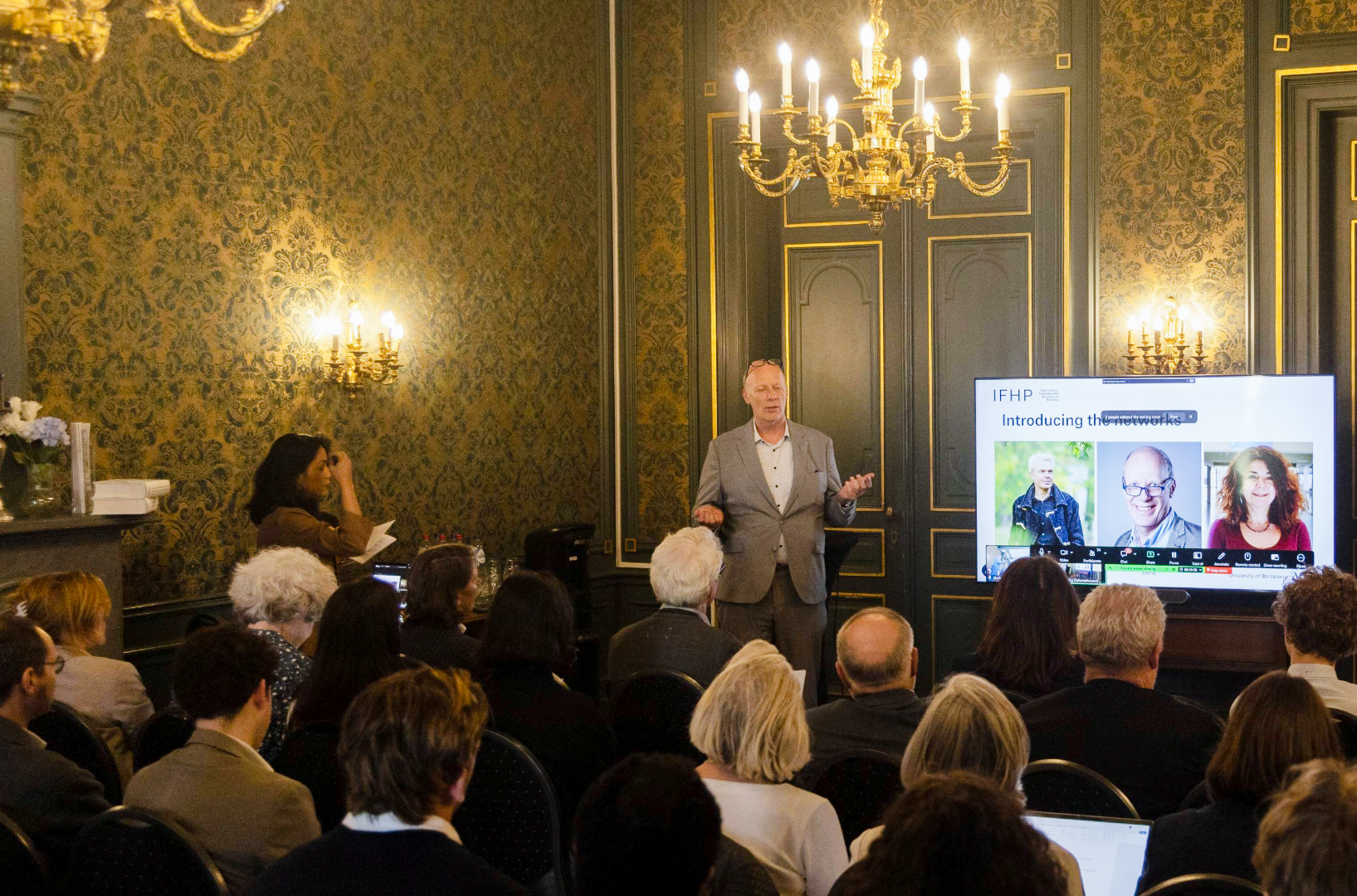
On 14 April 2026, a hybrid session gathered researchers, policymakers and practitioners from across Europe to respond to the new European Affordable Housing Plan, focusing on financialisation, spatial planning and concrete ways research, policy and practice can act together.
Building on the first session in January, the event invited researchers, policymakers, practitioners, housing advocates and early‑career professionals from several European countries to reflect on the European Commission’s emerging housing agenda, the role of financialisation and the possibilities and limits of EU‑level intervention. The session opened with a recap of the first “Hope for Housing?” dialogue, where participants stressed that “numbers alone” are not enough and that financialisation forms a structural obstacle shaping housing supply, tenure security and spatial inequality.
Throughout the discussion, participants underlined that financialisation is not an abstract concept but a concrete set of practices and regulations that channel capital into housing as an asset class. They pointed to mechanisms such as tax regimes, investment vehicles and public–private partnerships that privilege large‑scale investors over local communities, cooperative actors and non‑profit providers, and argued that any meaningful European Affordable Housing Plan must confront these structural drivers rather than limiting itself to production targets or narrow subsidy schemes. At the same time, the dialogue made clear that Europe must move beyond framing housing as a temporary “crisis” and instead treat it as a permanent structural challenge that requires a fundamental rethink of urban systems.
Key takeaways
1. Coordinated action and local empowerment
A livable Europe requires coordinated action at EU level, but success ultimately depends on implementation in regions, cities and neighbourhoods. Montserrat Pareja Eastaway (University of Barcelona) showed how EU frameworks, national regulations and local planning constantly interact, often in contradictory ways, leaving cities with acute affordability pressures but limited room to manoeuvre.
Financial transparency
Addressing opacity in property and investment markets is essential to understanding who owns, finances and controls housing in major cities. Matthew Baldwin (European Commission) and Esther Agricola (IFHP) argue that greater transparency around ownership structures, tax regimes and investment vehicles is needed to see how capital is channeled into housing as an asset class instead of as a social good. In addition, Katy Lock (TCPA) calls for "patient investment", for example by pension funds, that prioritises long-term stability and affordability over short-term returns, helping to align financial flows with the provision of secure, sustainable housing.
Empowered local governments
Mayors and local authorities are closest to residents’ needs but often constrained by national fiscal rules, state‑aid regulations and global capital flows. Darinka Czischke (ENHR) argued that a European housing agenda should enable local experimentation with public, cooperative and community‑led housing models, rather than weaken it through rigid financial and legal frameworks. Importantly, political will is key to addressing the housing crisis. As Katy Lock mentions, technical and design solutions already exist, but without political commitment throughout all levels, the housing crisis cannot be solved.
Residents leading the way
The dialogue emphasised a plea for residents, tenants’ unions, cooperatives and community organisations to lead the transformation so that housing remains a human right rather than simply an asset class. Supporting resident‑led initiatives and movements was seen as crucial to reconnecting housing policy with everyday lived realities. Simultaneously, participants noted that the causes of the housing crisis are not always obvious to people. Strengthening the connection between residents, policy and practice, particularly by involving communities directly in setting housing agendas, was therefore identified as a priority.
2. Prioritising the “existing city”
Participants highlighted that the most sustainable and affordable homes are often those that already exist and can be renovated, adapted or reused. This shifts attention from headline production numbers to the quality, location and reuse of the current housing stock.
The right to reuse
Inspired by debates on the “right to repair,” Olaf Grawert (House Europe!) called for a “right to reuse” buildings to prevent the demolition of structurally sound stock for short‑term, finance‑driven redevelopment. Such a right would prioritise transformation and renovation over speculative teardown‑and‑rebuild strategies. It is paradoxical that widespread vacancy persists alongside a housing crisis. As Sorcha Edwards (Housing Europe) argued, this contradiction underscores the need to reinvest in existing, vacant buildings rather than defaulting to new construction. Recognition for the existing city as a key resource is essential.
Cultural preservation
Working with existing buildings preserves the history, identity and social fabric of neighbourhoods, while addressing housing shortages more quickly and with a lower environmental footprint than construction. This perspective links housing policy to broader questions of climate, mobility and care in the existing city.
The apartments of tomorrow
As Olaf Grawert noted, the apartments of tomorrow are already built today “for the prices of yesterday.” Unlocking this potential requires aligning planning rules, financial instruments and EU programmes to support reuse and upgrade, rather than incentivising demolition and speculative new‑build projects.
3. Scaling collaborative housing models
Collaborative and community‑led housing models, such as cooperatives, community land trusts and co‑housing were discussed as concrete alternatives to speculative, financialised housing systems. These initiatives show how decommodified housing can combine long‑term affordability with social infrastructure and mutual support.
Decommodified housing and mutual care
By prioritising mutual care, long‑term affordability and democratic governance, these models resist treating homes as purely financial assets. They illustrate that housing can function as a commons and a social infrastructure, not just a commodity.
Serving diverse groups
Across Europe, such models are increasingly used to provide secure housing for students, older residents and people facing housing exclusion, rather than serving only the “happy few.” Participants stressed their potential to stabilise neighborhoods and support everyday forms of solidarity. At the same time, there is a clear warning against the risks of territorial segregation. Michaela Kauer (City of Vienna, Brussels Office) points out that a balanced territorial distribution of municipal housing throughout the fosters a social mix.
Cost‑rental success stories
Cost‑rental systems, such as those in Vienna and Ireland, demonstrate how reinvesting returns into the housing system can stabilise broader markets and protect affordability over time. Sorcha Edwards stressed that these examples offer valuable “recipes” that can be adapted to different local contexts within a European framework.
4. Bridging policy, research and practice
For structural change to take root, the session called for breaking down silos between policy, research and practice, for example through a more formalised European Housing Alliance. Martijn Eskinasi (EHPN) underlined that effective housing policy depends on continuous feedback loops between evidence, regulation and on‑the‑ground experimentation. Marja Elsinga (ENHR) called for stakeholders to "take the time to understand each other and learn together" to drive reform.
A common research agenda
Policymakers need researchers to identify which combinations of instruments, tenure forms, rent regulation, land policy, planning tools, financial models, work under specific local conditions. A shared research agenda can help compare approaches, expose unintended consequences and support more robust EU‑level measures.
Policy pipelines from EU to street level
Alankrita Sarkar (director of IFHP) stressed the need for clearer “policy pipelines” that translate high‑level European regulations and funding instruments into tangible improvements in homes, streets and neighborhoods. This involves designing programs with implementation in mind, and supporting local capacity to make use of EU tools.
A “sweet alignment” of will, law and capacity
Experiences from regions such as Catalonia show that progress occurs when political will, legal instruments and institutional capacity fall into a “sweet alignment.” Building such alignments across different governance levels was identified as a key task for the coming years.
Looking ahead
Participants called for explicitly naming and confronting financialisation, linking affordability to security of tenure, quality and location, and designing EU instruments that genuinely support non‑market and community‑based housing. Organisers and participants committed to continue working together, using the “Hope for Housing?” series and the upcoming European Affordable Housing Plan event in The Hague as stepping stones towards a more sustained European platform for critical and constructive housing dialogue.
By connecting coordinated but locally grounded action, a focus on the existing city, scaled‑up collaborative housing models and strong bridges between research, policy and practice, Europe can move towards a housing system that centres the good neighbourhood and the quality of life of all its residents.
Partners
The event is co‑organised with key European housing networks.
The European Network for Housing Research (ENHR) is an international network of researchers studying housing systems, policy and practice across Europe and beyond.
The European Housing Policy Network (EHPN), coordinated by the European Institute of Public Administration, brings together public officials and experts working on housing policy implementation and innovation in EU Member States.
International Federation for Housing and Planning (IFHP) is a global network of professionals working on better housing and urban futures across Europe and beyond.
Special thanks to our moderators Paul Gerretsen (Vereniging Deltametropool), Alankrita Sarkar (IFHP) and Rosa van Heel (Vereniging Deltametropool), and to our speakers Matthew Baldwin (European Commission), Darinka Czischke (TU Delft / ENHR), Olaf Grawert (HouseEurope!), Sorcha Edwards (Housing Europe), Montserrat Pareja-Eastaway (Universitat de Barcelona), Katy Lock (TCPA), Isabel van de Geer (Ministry of Housing and Spatial Planning, Netherlands), Michaela Kauer (City of Vienna Brussels Office), Martijn Eskinasi (European Housing Policy Network), Esther Agricola (International Federation for Housing and Planning) and Marja Elsinga (ENHR), whose presentations you can watch back here.