Responses across research, policy and practice
Apr
14
2:00 PM14:00

Responses across research, policy and practice

European Affordable Housing Plan

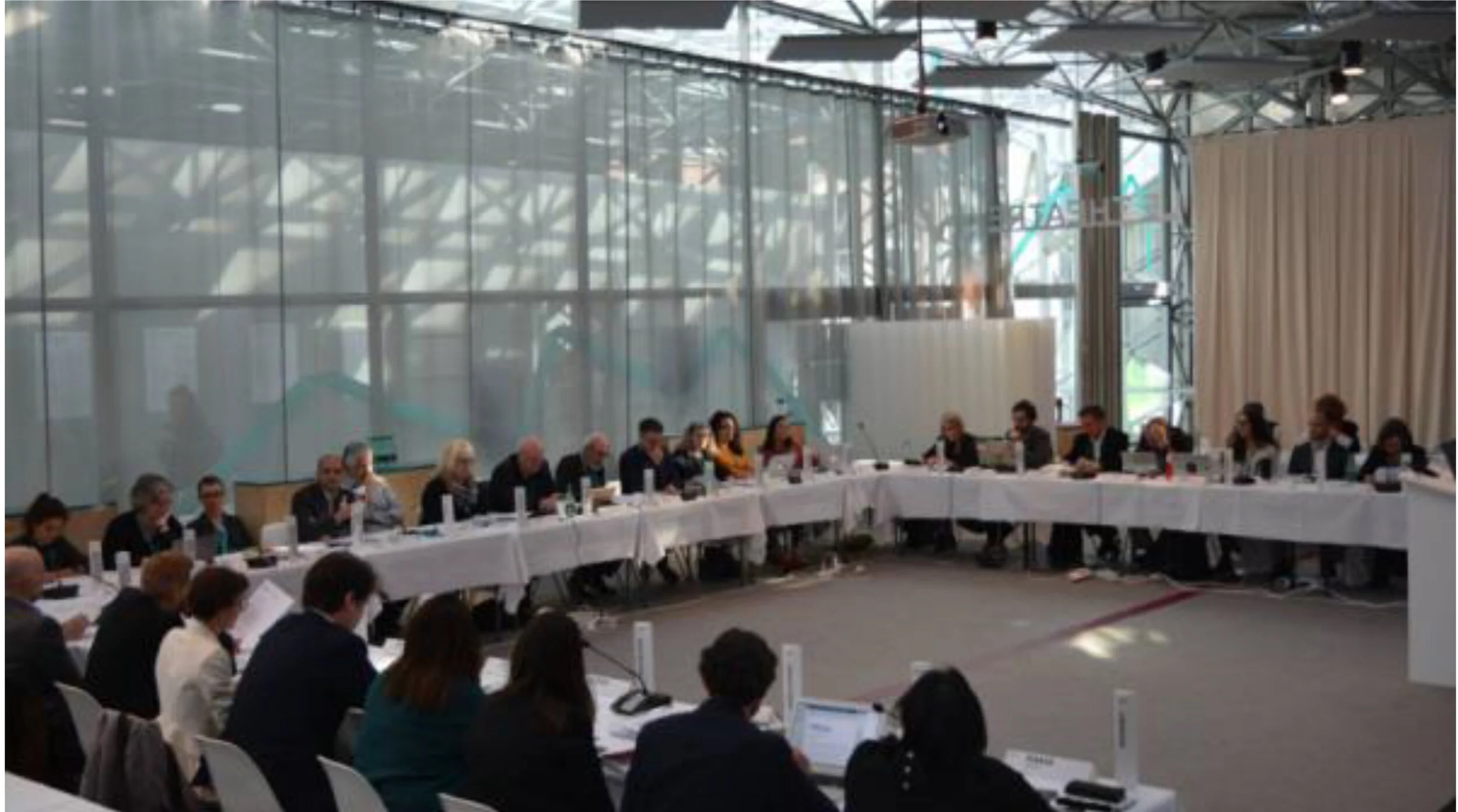
Following our “Hope for Housing?” dialogue in January 2026, IFHP and its partners invite you to join us in exploring how the European Affordable Housing Plan can be turned into concrete action across research, policy and practice. Do not miss your opportunity to get involved in this growing movement and knowledge exchange – save the date and join researchers, policymakers, and practitioners across Europe in a hybrid format.

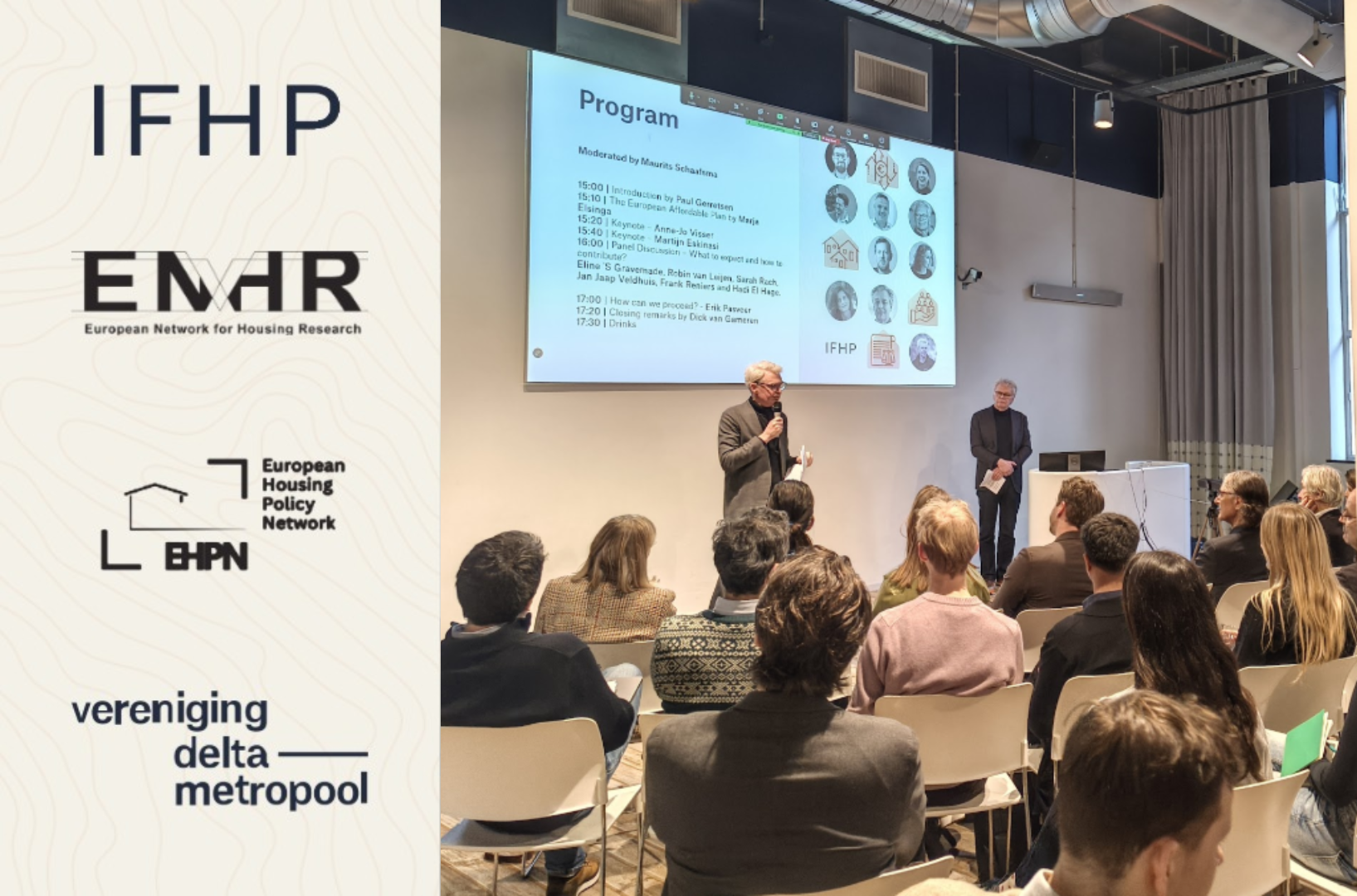
How can the European affordable housing agenda be meaningfully connected to political and spatial planning systems across different governance levels? In January, International Federation for Housing and Planning (IFHP) and Vereniging Deltametropool (VDM) hosted a public dialogue titled “Hope for Housing? The European Affordable Housing Plan” at the Faculty of Architecture, TU Delft. Two main takeaways. First, that housing cannot be addressed through numbers alone: spatial planning, social infrastructure, livability and territorial coherence must be part of the conversation. Second, that financialization remains the structural obstacle that no technical or regulatory fix alone can resolve. You can read more details through this link.

This second event continues the dialogue and exchange around the newly released European Affordable Housing Plan, a European Commission initiative to support more affordable, decent and sustainable housing.

Carrying the first reactions forward and adding new responses, we convene researchers, policymakers, and practitioners to critically engage with the European Affordable Housing Plan, and its implications for housing provision in the Netherlands and other European settings.

We welcome housing researchers, civil servants, housing providers, NGOs, and early-career professionals who want to engage critically and constructively with this agenda.

Discussions will span regional planning approaches to housing supply, the role of knowledge-sharing infrastructure across cities and research networks, and how EU-level ambitions can be grounded in local and regional realities.

To be hosted on the 14 April by International Federation for Housing and Planning, with support from European Network for Housing Research, European Housing Policy Network, Ministry of Housing Netherlands, and Vereniging Deltametropool, the event will contain:

  1. Reflections from earlier expert discussions;

  2. Stakeholder roundtables with perspectives from the Netherlands and selected Member States;

  3. A forward-looking session to define collective actions.

the aim

The aim is to initiate a sustained collaboration among European housing networks that can collectively provide structured, critical, and constructive input to the European Housing Task Force. The event is designed as an open, working dialogue: not just presentations, but space for questions, debate, and shared reflection. It is also a concrete opportunity for early-career researchers and young professionals to bring fresh perspectives into European housing policy and practice.

We are designing the program together for an interactive session between our European members and an international audience online alongside participants in the Netherlands. Whether you join us in the room or from anywhere in Europe, your voice is part of this discussion.

partners

The event is co‑organised with key European housing networks.

The European Network for Housing Research (ENHR) is an international network of researchers studying housing systems, policy and practice across Europe and beyond.

The European Housing Policy Network (EHPN), coordinated by the European Institute of Public Administration, brings together public officials and experts working on housing policy implementation and innovation in EU Member States.


International Federation for Housing and Planning (IFHP) is a global network of professionals working on better housing and urban futures across Europe and beyond.

This event is part of an ongoing collaboration between the International Federation of Housing and Planning (IFHP) and Deltametropolis Association (VDM), supported with a Memorandum of Understanding. VDM and IFHP share a common vision, focusing on urban and societal development with a high quality of life. This agenda brings together both the local context and global perspectives to tackle challenges with sustainable and socially equitable spatial development, planning and housing.

program

14:00 Welcome: Hope for Housing and the European Affordable Housing Plan

IFHP and VDM | ENHR | EHPN

14:15 Keynote presentation: Matthew Baldwin (European Commission)

Questions: The two core tensions are named clearly — housing as a systemic precondition for EU ambitions, and financialisation as a structural obstacle no technical fix alone can resolve.

14:30 Audience interaction with the panel

14:45 Panel 1: What works in housing? Lessons from across Europe

This panel discusses an array of different initiatives, projects ongoing at the European scale and learning from collaborative models of housing and the need for EU-level support. We also dialogue with the experts on how the citizens can be involved in such agendas — where and how do you connect people to practice and policy? Featuring: Darinka Czischke (ENHR), Olaf Grawert (House Europe!) and Sorcha Edwards (Housing Europe).

15:05 Audience interaction with the panel

15:20 Coffee Break

15:40 Panel 2: Where does housing meet planning? Voices from Europe’s regions

This panel takes stock of the spatial planning challenges from local and national scales across different parts of Europe. Panellists are asked how EU Member States, regions, and cities are responding; what opportunities exist in combining affordable housing funding with digital and other infrastructure investment; and what the implications are of balancing housing demand within regions for public, private, and civic stakeholders involved in housing delivery and governance. Featuring: Montserrat Pareja Eastaway (University of Barcelona), Katy Lock (TCPA, UK), Michaela Kauer (Director, Brussels Office of the City of Vienna) and Isabel van de Geer (Ministry VRO Netherlands.)

16:20 Audience interaction with the panel

16:40 Panel 3: Conclusion — How can research, policy and practice join hands?

Opening question: Can a European housing agenda be the key to liveable, competitive, and just cities? How can we simplify the agenda for local implementation? What is missing and how can we contribute? Featuring: Martijn Eskinasi (EHPN), Esther Agricola (IFHP) and Marja Elsinga (ENHR.)

17:00 End


join the discussion

Participation is free, but registration is required for both in-person and online attendance.

Join us in-person in The Hague / Join us Online 
For any queries, email Alankrita Sarkar (a.sarkar@ifhp.org


View Event →
Hope for Housing? The European Affordable Housing Plan
Jan
21
2:30 PM14:30

Hope for Housing? The European Affordable Housing Plan

  • Berlagezaal, TU Delft Faculty of Architecture & the Built Environment (map)
  • Google Calendar ICS

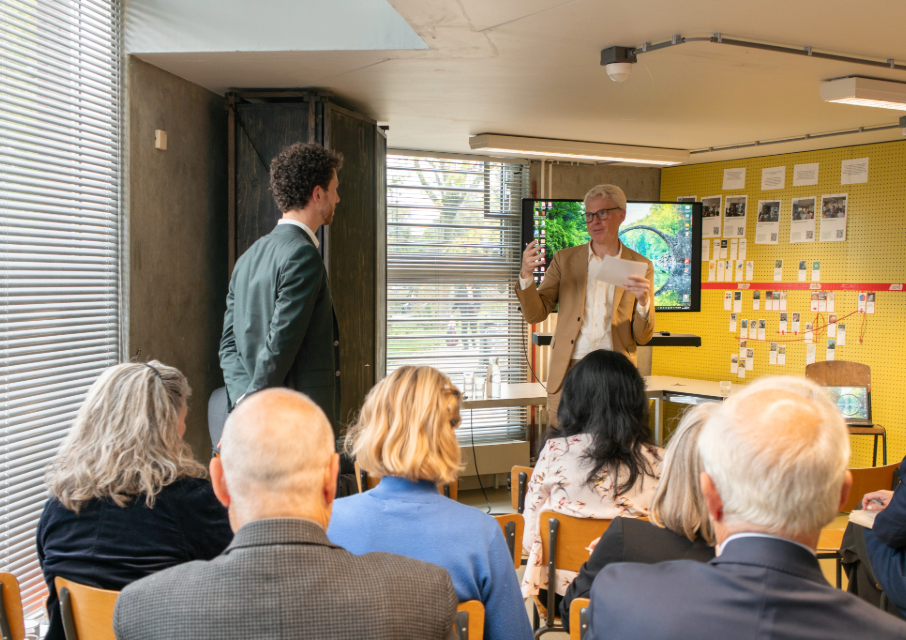
How can the European affordable housing agenda be meaningfully connected to political and spatial planning systems across different governance levels? Following IFHP's recent relocation to the Netherlands and the publication of the European Task Force report on the Affordable Housing Plan, IFHP and the Deltametropool Association are convening to reflect on its implications and next steps. We welcome you to contribute to the European housing agenda and positioning of the Netherlands in a focused session.

The dialogue will examine how the European affordable housing agenda can be more effectively connected to political and spatial planning systems across governance levels. It will address the persistent gap between EU guidance and decentralised implementation, and reflect on how the Dutch context can inform more coordinated housing and planning action in Europe. Against this backdrop, the panel will confront the long‑standing fragmentation between housing policy and spatial planning, focusing on the institutional, territorial, and governance conditions needed to translate shared ambitions into action.

For in-person participation: Register here  

For online participation: Register here

This event is a collaboration with Vereniging Deltametropool.

Program

Moderated by Maurits Schaafsma (Haarlemmermeer/ IFHP)

14:30 | Walk-in with coffee

15:00 | Introduction by Paul Gerretsen (IFHP and Deltametropolis Association)

15:10 | The European Affordable Plan by Marja Elsinga (TU Delft)

15:20 | Keynote – Anne-Jo Visser (Amsterdam Federation of Housing Cooperations)

15:40 | Keynote – Martijn Eskinasi (Ministry of Housing and Spatial Planning)

16:00 | Panel Discussion – What to expect and how to contribute?

Eline ‘S Gravemade (European Commission Housing Task Force), Robin van Leijen (AEDES/ Housing Europe), Sarah Rach (The Hague), Jan Jaap Veldhuis (IPO), Frank Reniers (Ministry of Housing and Spatial Planning) and Hadi El Hage (European Cultural Centre)

17:00 | How can we proceed? – Esther Agricola (BPD) and Erik Pasveer (Amsterdam)

17:20 | Closing remarks by Dick van Gameren (TU Delft/Mecanno)

17:30 | Drinks

View Event →
IFHP x VDM Learning Labs #8
Nov
26
2:00 PM14:00

IFHP x VDM Learning Labs #8

During this we explored the complex question of “affordable housing,” analyzing the varying definitions and implementations across different regions and governance structures. We discussed the distinction between social housing and affordable housing, and how these models can address the diverse needs of urban populations.

View Event →
The Housing Dilemma — A roundtable discussion
Nov
10
2:30 PM14:30

The Housing Dilemma — A roundtable discussion

On 20 October, we welcomed IFHP members and the wider community to a public roundtable titled “The Housing Dilemma: Affordability Now vs. Resilience Tomorrow”, co-hosted by IFHP and Vereniging Deltametropool at the Toekomstatelier Oostkop, Nieuwe Instituut, Rotterdam. The session brought together a diverse group of housing experts, policymakers, academics, and practitioners from across Europe to explore a pressing question: how can we accelerate the production of affordable housing while safeguarding ecological and social resilience?

This Roundtable brought together a diverse group of participants, including representatives from the municipalities of Utrecht (Kees Verschoor), The Hague (Sarah Rach), and Amsterdam (Erik Pasveer), and Ministry of Housing and Spatial Planning (Geert S.). They were joined by architect Willemijn van Manen (ZUS Architects), Annemarieke Van Ettinger-Van Herk (Maaskoepel) and Professor Marja Elsinga (Delft University of Technology). From the IFHP community, former board members Gary Klassen, Klaus Peter Hillebrand, and Regitze Marianne Hess participated, alongside current board members Esther Agricola, Erik Pasveer, and Maurits Schaafsma and newly appointed CEO Paul Gerretsen, and director of operations Alankrita Sarkar. We would like to sincerely thank all participants, speakers and partners for their valuable contributions, critical reflections and willingness to share experiences across cities and countries.

The afternoon began with introductions by Paul Gerretsen and Alankrita Sarkar of the theme “Affordability Now vs Resilience Tomorrow”. Then the Rotterdam case study Atelier Bloemhof was pitched, after which four speakers presented statement pitches exploring housing and resilience practi ces. This was followed by a group discussion.

Statements

Willemijn van Manen introduced Atelier Bloemhof as a bottom-up initiative aimed at preserving and revitalizing a neighborhood in Rotterdam. Bloemhof faces complex challenges: water management due to low-lying soil, subsidence and black mold, narrow streets with little room for extra water storage, and fragmented ownership structures. These issues are compounded by a lack of clear responsibility between private owners, housing cooperatives, and the municipality.

Two parallel tracks are currently in motion:
— Atelier Bloemhof (bottom-up): Engaging directly with the community to explore soil conditions and neighborhood needs, though currently paused by the municipality.
— TU Delft (top-down): Developing scenario studies to guide spatial transformation.

One of the key proposals, the “Natte T” scenario, envisions a block-by-block transformation—creating more space for water and gradual, ethical redevelopment that protects the community fabric, in contrast to large-scale clearance projects like Tweebosbuurt, which suffered from poor communication and resident distrust.

Geert Slabbekoorn presented the perspective of the Ministry of Housing and Spatial Planning. He identified the tension in the interaction between subsidies and investments. The shift from construction subsidies to subject subsidies (income-based housing support) over the past century has blurred the line between social policy and housing policy. Housing corporations are now expected not only to address shortages but also to invest heavily in climate resilience, renovation, and new construction, all within tight financial constraints. Subject subsidies help pay the rent but are also indirect tool for housing investors.

Sarah Rach outlined The Hague’s housing dilemma, shaped by demographic change, ageing, and individualization, which strain social cohesion and housing supply. The housing market has stagnated: people aren’t moving, and new homes are often too small for families. The city also faces physical space constraints, balancing demands for housing, green areas, energy transition, and economic development. She stressed the need to think beyond short-term crisis management and adopt a long-term, integrated approach to housing, combining social and spatial strategies. New concepts like cohousing and shared living could help but remain politically sensitive.

Kees Verschoor presented Utrecht’s housing challenge as a trilemma: balancing quantity, quality, and affordability. Affordability is not a general issue. It hits young people and renters the hardest, especially in cities, while homeowners and residents in provincial areas are less affected. He emphasized that the sector must confront its own limitations: current business models fail to deliver sufficient social and mid-range housing, even though these groups make up most of the population. Despite high land values and limited construction capacity, the importance of collective responsibility and collaboration across sectors to find solutions must be stressed. When asked what residents value most, the answer was simple: a roof over one’s head. Meeting that basic need must come before anything else.

Finally, Erik Pasveer discussed Amsterdam’s financial and spatial housing challenges, noting that many constraints are driven by microeconomic forces, including speculative and sometimes opaque capital flows, beyond direct municipal control. While not all issues can be solved locally, the city must still take action where it can. Business cases for housing remain complex but feasible, with Amsterdam needing to build around 7,000 homes per year to keep pace—though actual demand is far higher. The city faces continued population influx, functioning as a “migration hotel,” which strains affordability and capacity. In Amsterdam, urban development is not only about quantity, but also about revitalizing post-war neighborhoods, fostering new partnerships with housing associations, and reimagining urban form as a tool to bring people together.

Conclusions

Participants discussed the affordability and resilience of housing and how they must no longer be seen as competing goals. Instead, the real challenge lies in aligning immediate needs with the structural transformations required for a sustainable future. As several speakers noted, this involves strengthening the connection between bottom-up initiatives and increased transparency and collaboration at every level. Cities must rethink land ownership and financial models and design innovations for flexible, long-term housing concepts. Local experiments and community efforts are key here. Inclusive decision-making is part of this too, ensuring homeseekers’ voices are heard. Participants also stressed the importance of regional cooperation within the wider metropolitan housing market, acknowledging that solutions extend beyond city borders.

VDM and IFHP

VDM and IFHP share a common vision, focusing on urban and societal development with a high quality of life as their primary objective. Collaborating on this agenda brings together both the local context and global perspectives to tackle challenges with sustainable and socially equitable spatial development, planning and housing. While VDM focuses on the Eurodelta and IFHP represents the broader international context. This collaboration led to the establishment of a formal partnership with a Memorandum of Understanding to develop a shared vision and action plan from 2024 onwards.


View Event →
IFHP x VDM Learning Labs #7
Oct
29
2:00 PM14:00

IFHP x VDM Learning Labs #7

  • International Federation for Housing and Planning (map)
  • Google Calendar ICS

This seventh session addressed an ongoing debate in urban planning between prioritizing the quantity of housing versus ensuring the quality of housing. It focused on how urban planning can enhance climate resilience by integrating sustainability and climate-adaptive strategies into housing development.

Key themes from Prachi Rampuria

Prachi Rampuria argues that balancing housing quantity with quality in a time of housing and climate crisis requires an eco-responsive and systems-based approach to settlement design rather than a narrow focus on individual buildings.

She frames the UK’s housing crisis as simultaneously a numbers and a quality problem, insisting that delivering large volumes of homes must go hand-in-hand with creating resilient, inclusive neighborhoods that support recreation, health and well-being while responding to environmental and social emergencies. This leads her to advocate for integrated, multiscale design thinking that connects buildings, plots, streets, and natural infrastructure, drawing conceptually on Kate Raworth’s Doughnut Economics to keep human needs within ecological limits.

Using her practice’s Heath Park project near Liverpool as a main example, Rampuria explains how an eco-responsive approach starts from the “deep layers” of settlementlandform, water systems, and green infrastructure, before addressing buildings and surface-level development. At Heath Park, a former single-tenant chemical headquarters turned business park is reimagined as a mixed-use, zero‑carbon neighborhood, requiring a shift of investment and planning attention from short-term building products to long-lived natural systems and strategic mobility networks that form a resilient base for housing delivery.

The Heath Park masterplan combines around 600 homes (with a substantial affordable share), significant office and studio space, and more than six hectares of green space, all phased carefully to allow existing businesses to continue operating and existing communities to grow alongside new residents.

Rampuria concludes with three main lessons for reconciling quantity and quality in eco-responsive housing.

1. A development brief is crucial: without explicit quality and sustainability ambitions embedded in the brief, design teams face an uphill struggle to exceed conventional benchmarks, especially where political will is weak or suburban contexts are steeped in car-dependent, “not in my backyard” attitudes.

2. Project management must structured design processes that bring the right expertise in at the right time and deliberately sequence questions and decisions across disciplines and scales.

3. The power of storytelling alongside evidence: while data and metrics are necessary, many stakeholders understand and hold their beliefs through narratives.

Key themes from Abdi Mehvar

Abdi Mehvar’s key message is that climate‑adaptive planning for the Dutch delta must adress with how the financial sector currently understands and manages climate risks in real estate and infrastructure.

He presents findings from the RED&BLUE program, a multi‑year, transdisciplinary initiative with Dutch universities, governments and market actors that aims to co‑develop integrated climate risk management strategies for low‑lying urban areas, including use cases in Amsterdam and Rotterdam.

Abdi analysed public reports from Dutch banks, insurers and pension funds to see how they conceptualise climate risks, what hazards and scales they focus on, what they see as barriers and opportunities, and which institutional “logics” guide their decisions.

Abdi shows how Dutch financial institutions typically balance attention between transition risks (linked to decarbonisation) and physical risks (such as floods, droughts and heatwaves), but that some actors lean more strongly to one side. Flooding, drought, heatwaves, storms and other extreme weather emerge as the most frequently discussed hazards, while land subsidence, sea‑level rise, health impacts and biodiversity loss are mentioned but less central, even though they are critical for long‑term resilience in the delta.

He also finds that most measures and analyses are concentrated at the building/ asset scale and the national scale (e.g. retrofitting, flood stress tests, national delta strategies), whereas area and neighbourhood scales – crucial for spatial planning and climate‑adaptive urbanism – remain comparatively underdeveloped.

Across institutions, internal governance and public regulators (government, central bank, water boards) are all seen as responsible for managing climate risk, with property owners also recognized but generally framed as less central actors, raising questions about who should act on which hazard and at which spatial level.

Abdi therefore calls for closer dialogue between planners, designers, policymakers and financial institutions, so that climate‑adaptive planning is aligned with how capital is allocated and risks are perceived, and so that the costs and benefits of resilience measures are shared more fairly across society.

Prachi Rampuria

Prachi co-founded EcoResponsive Environments in 2019, an award-winning practice creating health- and wellbeing-focused places through systems-based design. With over ten years’ UK experience, she has led multidisciplinary teams on masterplans, planning applications, and public realm projects. Trained in India under B.V. Doshi and holding an MA (Distinction) in Urban Design from Oxford Brookes, she received the Urban Design Prize. Her firm’s Heath Park masterplan was recognised by the UK Government and won major national awards. Co-author of EcoResponsive Environments (Routledge), she also teaches at Oxford Brookes and serves on several Design Review Panels.

Abdi Mehvar

Abdi is a Postdoctoral Researcher at the Faculty of Architecture and the Built Environment (Urban Development Management Group) at TU Delft. Holding MSc and PhD degrees in Coastal Engineering from the Netherlands, he has years of professional experience in leading and carrying out collaborative and cross-disciplinary research projects with a focus on climate risks and resilience in Europe and South-East Asia. Abdi will present his work with the Area Development Knowledge Foundation (SKG) and his involvement in the RED&BLUE project, a five-year transdisciplinary research initiative developing integrated real estate and infrastructure climate risk strategies for the Dutch delta.

View Event →
IFHP x VDM Learning Labs #6
Sep
24
2:00 PM14:00

IFHP x VDM Learning Labs #6

This sixth session will examine how housing policies influence social and economic inequality, exploring the role of urban development strategies in either perpetuating or addressing disparities. It will focus on how inclusive housing policies can contribute to social equity and help create more just, resilient cities.

View Event →
Join the discussion! IFHP webinar on affordable housing
May
4
10:00 AM10:00

Join the discussion! IFHP webinar on affordable housing

  • International Federation for Housing and Planning (map)
  • Google Calendar ICS

All IFHP members are invited to join the discussion on our flagship project, Affordable Housing for All. This is the second, albeit self-contained session of a two part online series. You will get the opportunity to follow the project’s development as well as come with suggestions for its further development. During the first session we introduced the project in some detail, and now during the second session you will be able to participate in a critical discussion including distinguished scholars researching housing affordability from across the world. We will also present some preliminary observations and talk about the next steps.

Register here.

We look forward to seeing you!

View Event →